Wood, Fire, Earth, Metal, Water were never five substances. They were five ways things move — and the people who wrote them down tied each one to an organ, a taste and a smell, then to the plants that healed, and then to the scents those plants gave off. This is that line, from the founding text to the bottle on your table tonight.

To name how things move — then to make it a system. The oldest listing of the five is not about substances: water descends, fire rises, wood bends and straightens, metal yields and reshapes, earth takes the seed and gives the harvest. Two centuries on, Zou Yan turned the five into cycles — each feeding the next, each restraining another — and applied them to seasons, directions and dynasties.
And in the same sentence, five tastesSalty for water, bitter for fire, sour for wood, pungent for metal, sweet for earth. Without the ring, a scent has no address; with it, every taste has one.

To read a person. The Inner Classic lays the five over the body: each movement keeps an organ system, a season, an emotion, a colour and a taste. Not five parts — five ways a body moves. And the rule everything rests on: look at the person first, then choose.
The tradition's map of the body, drawn 2,100 years ago. We use it to read, never to treat — a diffuser oil is not medicine, and our blends are composed around an element and described by their scent.
It even sorts smell into fiveThe five smells here are what a physician noticed on a patient — a diagnostic list, not scents to wear. We inherit the habit of five families, not the five words: Wood, for us, smells of trees, sap, cut stems.

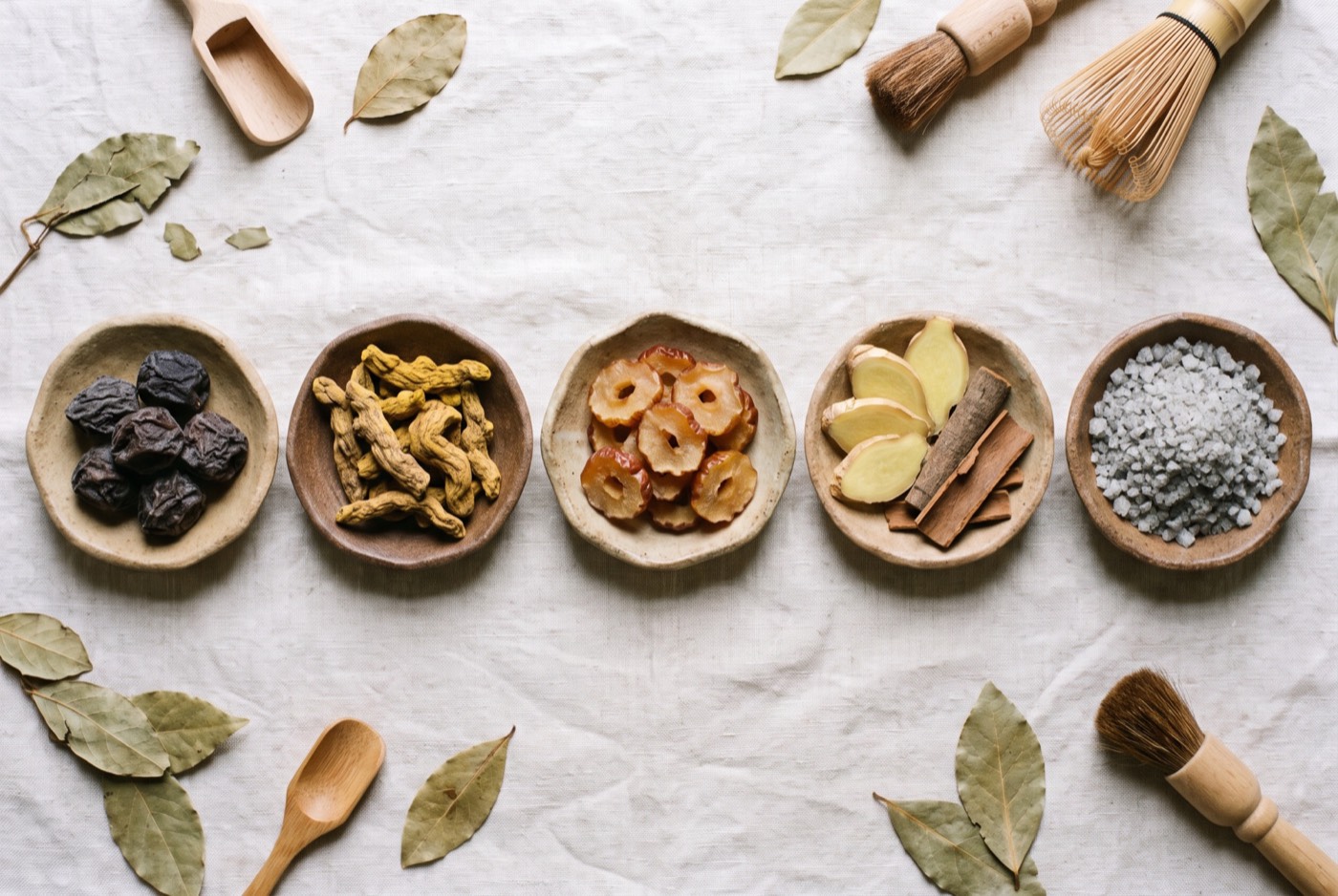
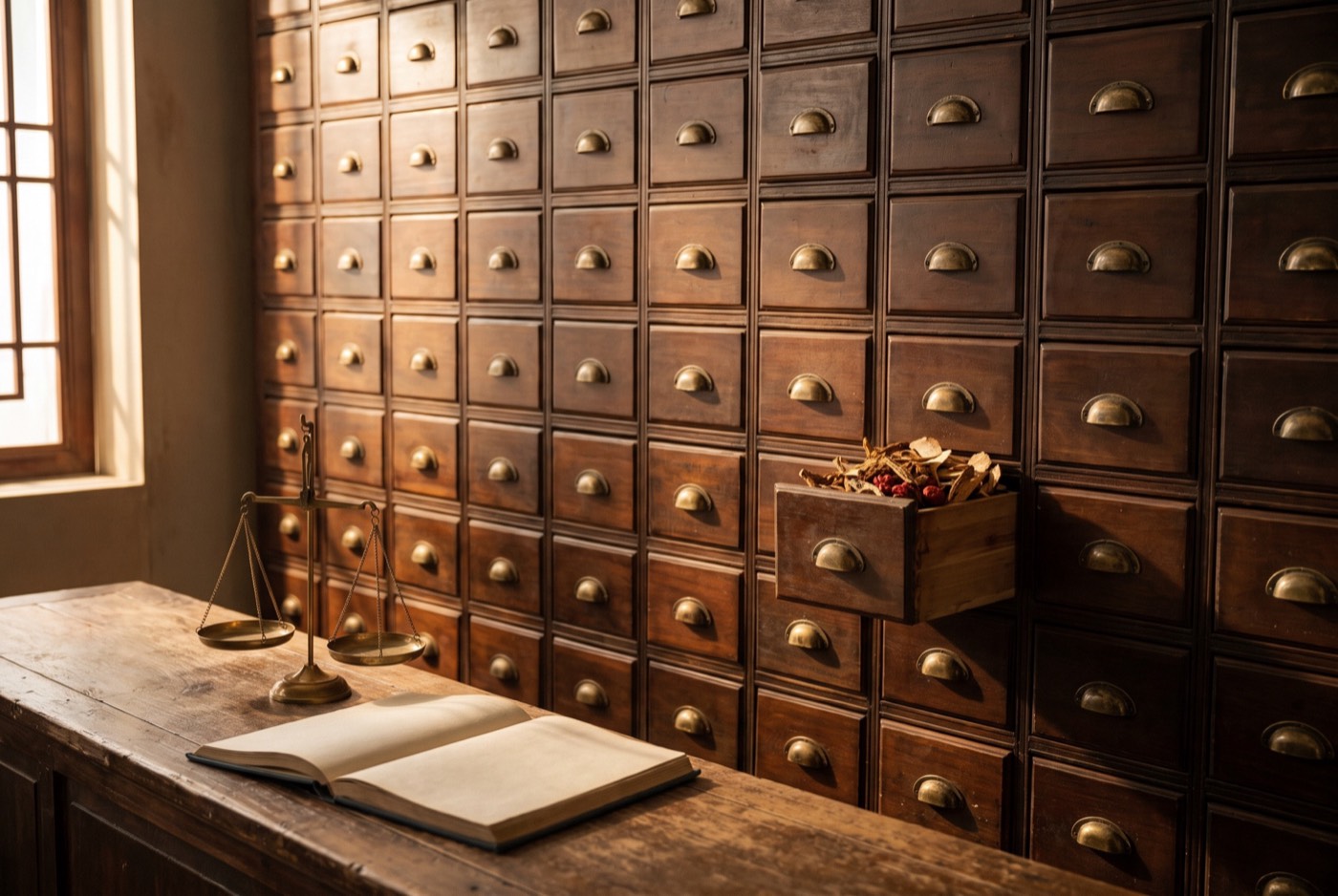
To heal with plants — the oldest way there is. Legend gives it a face, Shennong tasting a hundred herbs; the real practice was thousands of people doing that slowly and passing it on. By the Han it was written down: 365 plants, each with its nature — warming or cooling — and its taste. Taste was the address: sour with Wood, bitter with Fire, sweet with Earth, pungent with Metal, salty with Water.
This is the hinge, for usEvery aromatic plant in a bottle today has a taste and a nature in that book — and therefore an element.

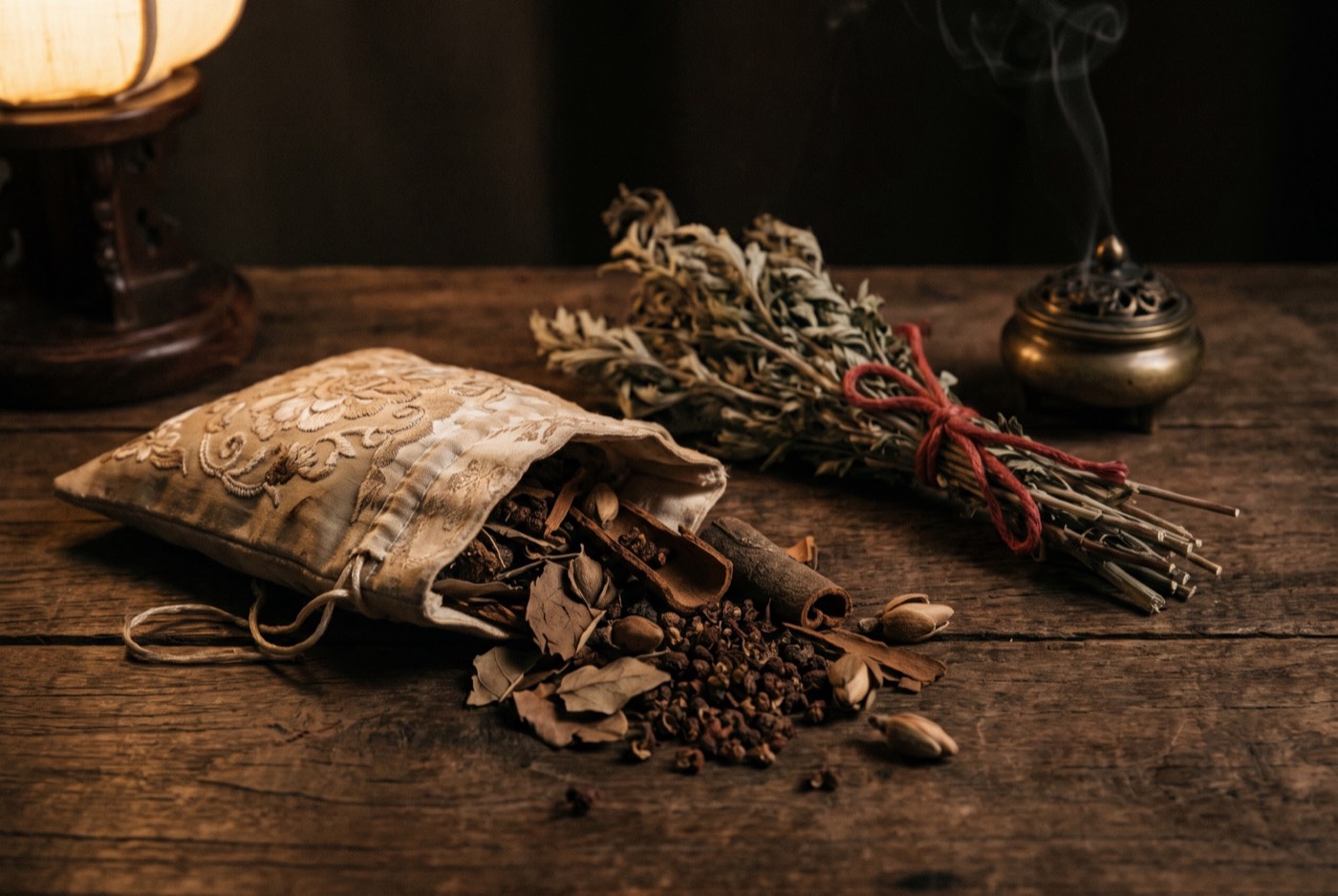
To heal with scent itself. In 168 BC a noblewoman was buried at Mawangdui with silk sachets of aromatic herbs — pepper, magnolia bud, sweet grass — and a censer beside her. Fragrant plants were worn, burned and hung: mugwort over the door at Duanwu, sachets against pestilence, smoke to clear a sickroom. The tradition held that a scent could do work, and built a daily practice around it.
The fragrant herbs, 芳草, kept as their own familyMugwort, calamus, patchouli, magnolia, agarwood — chosen by nature and taste, and so by element.

To practise it every day — and keep correcting the record. Under the Song, incense became one of the four arts a scholar was expected to master, its recipes composed with the five in mind and written down under names. Sun Simiao had set the standard in the 600s — put simply, read the person before you reach for the plant — and in 1590 Li Shizhen’s Bencao Gangmu gave the fragrant herbs a chapter of their own.
By now a scent had a nature, a taste, a movement and a useAll written down, all checked by the next person to inherit it.

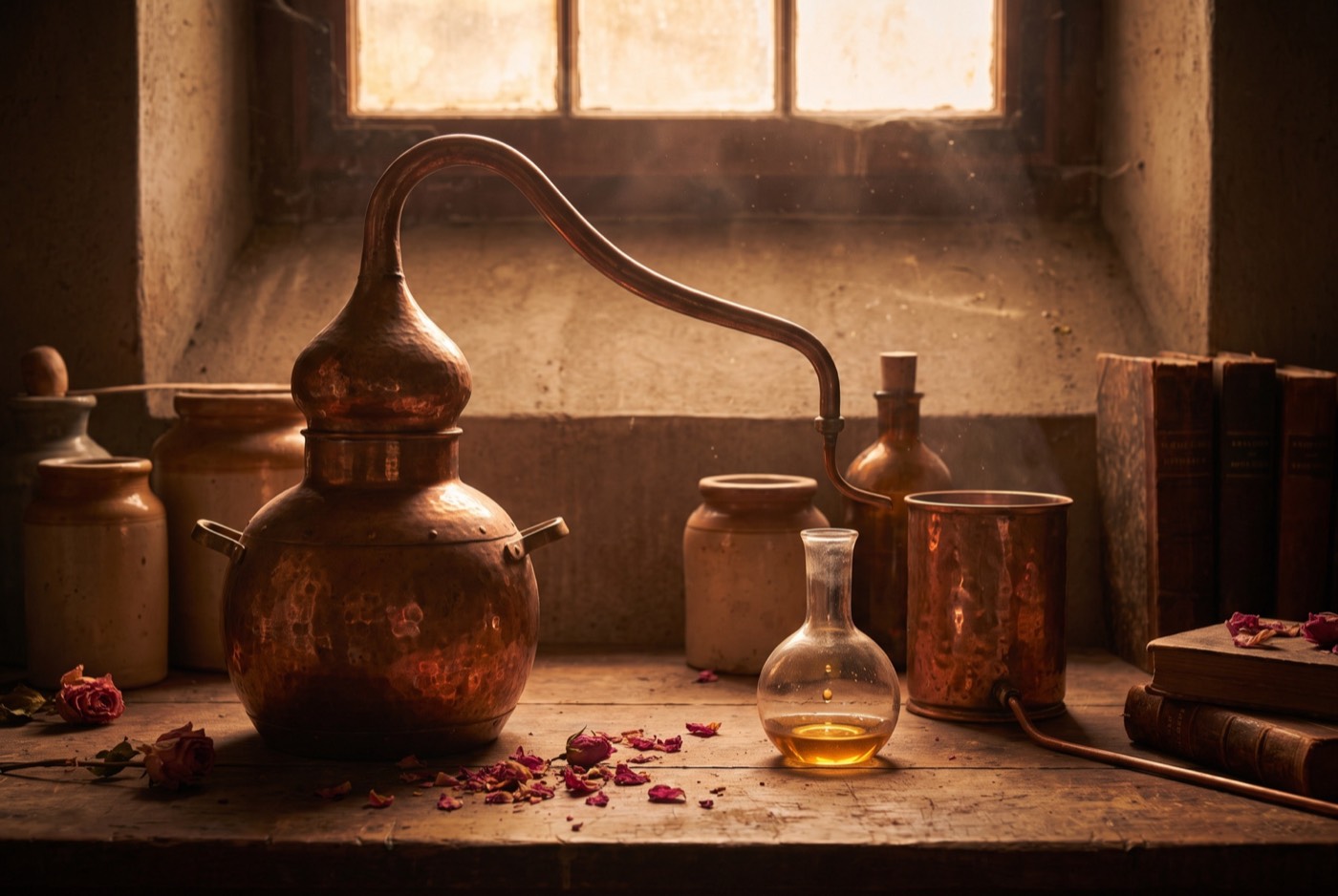
To capture the scent itself. Around 1000, Ibn Sina refined steam distillation in Persia — the essence separated from the plant. In 1937 Gattefossé gave the practice its Western name, aromathérapie; in the 1950s Marguerite Maury blended for the individual in front of her — Sun Simiao’s conclusion, reached again from the other side of the world.
Rose first, then lavender, then everythingThe essential oil is where the Chinese herbal line and the Western aromatic line become the same material.
Read across. The movement and the taste are from the founding texts. "In nature" is what each element looks and smells like in the world — which is where our scent families come from. The last column is us: the blend for that element, and what it smells like.
| Element | Movement · season | Taste · 洪範 | In nature | Our blend · our scent |
|---|---|---|---|---|
| 木Wood | rising · bends and straightens spring |
酸sour | trees, sap, cut stems — green | Wood · RiseGreen and bright, like a cut stem |
| 火Fire | flaring · flames and rises summer |
苦bitter | flame, hearth, warm smoke — warm | Fire · HearthWarm and close, a little smoky-sweet |
| 土Earth | settling · seed and harvest late summer |
甘sweet | soil, grain, resin — soft | Earth · GroundSoft, low and resinous |
| 金Metal | sharpening · yields and reshapes autumn |
辛pungent | cold air, stone, autumn — clean | Metal · ClearCold, clean air through an open window |
| 水Water | deepening · moistens and descends winter |
鹹salty | rain, rivers, depth — cool | Water · StillDeep, cool and slow |
We choose by the element first — the reading says which of the five you have run light on — then by the plants whose taste and nature sit in that movement. We describe the element and the scent; what a blend does once it is in your room is yours to notice, not ours to promise.
Someone who matters to you is having a hard year. You can’t fix it. You can make the room nicer. That is where most of us begin — a diffuser, a few oils, the shop’s own signature scent — and it is exactly where I began.
I tested everything on myself first. I wanted her evenings lighter, and I half believed what the boxes promised. What I got was a headache by the third night, with only two sticks in the bottle. The room smelled lovely. Nobody felt any better.
The question that wouldn’t leave. If a scent could turn an evening worse, why couldn’t one be composed to sit right in it — on purpose, from the plant up, instead of from the perfume down?
A koala answered part of it. In Australia I watched one eat, and learned its whole diet is eucalyptus — the same leaf in the medicated oil my family has kept in the drawer for as long as I can remember, made to the same formula for the better part of a century. Somebody, long ago, had already chosen plants for a purpose.
So I read for a year. Every component: where it grows, what it smells of, what the old texts kept it for. Slowly I stopped choosing by scent and started choosing by purpose — and every road led back to the same place: the herbals, and the five (五行) they sorted plants by — the same five the old physicians had already laid over the whole body, one system to each.
So: Elemental Scents. Five blends for the five elements — the same five the physicians used to read a whole person, each with its season and its taste, each feeding the next and checking another, the whole held in balance. Each blend is composed around its element, from what was already there. One is finished. Four are on the bench, and the cards say so.
It began as a way to make one person’s evenings a little lighter. It still is.
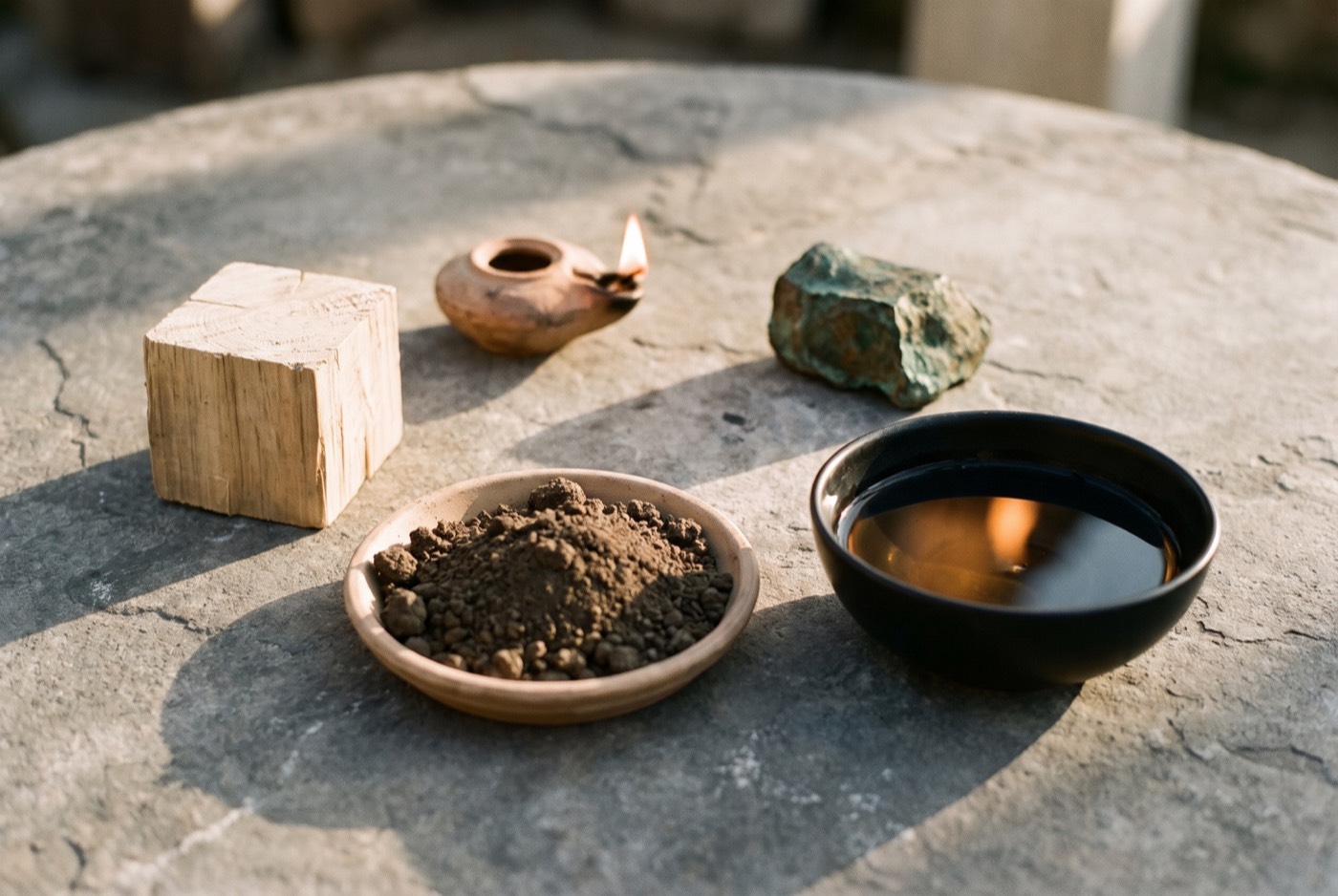
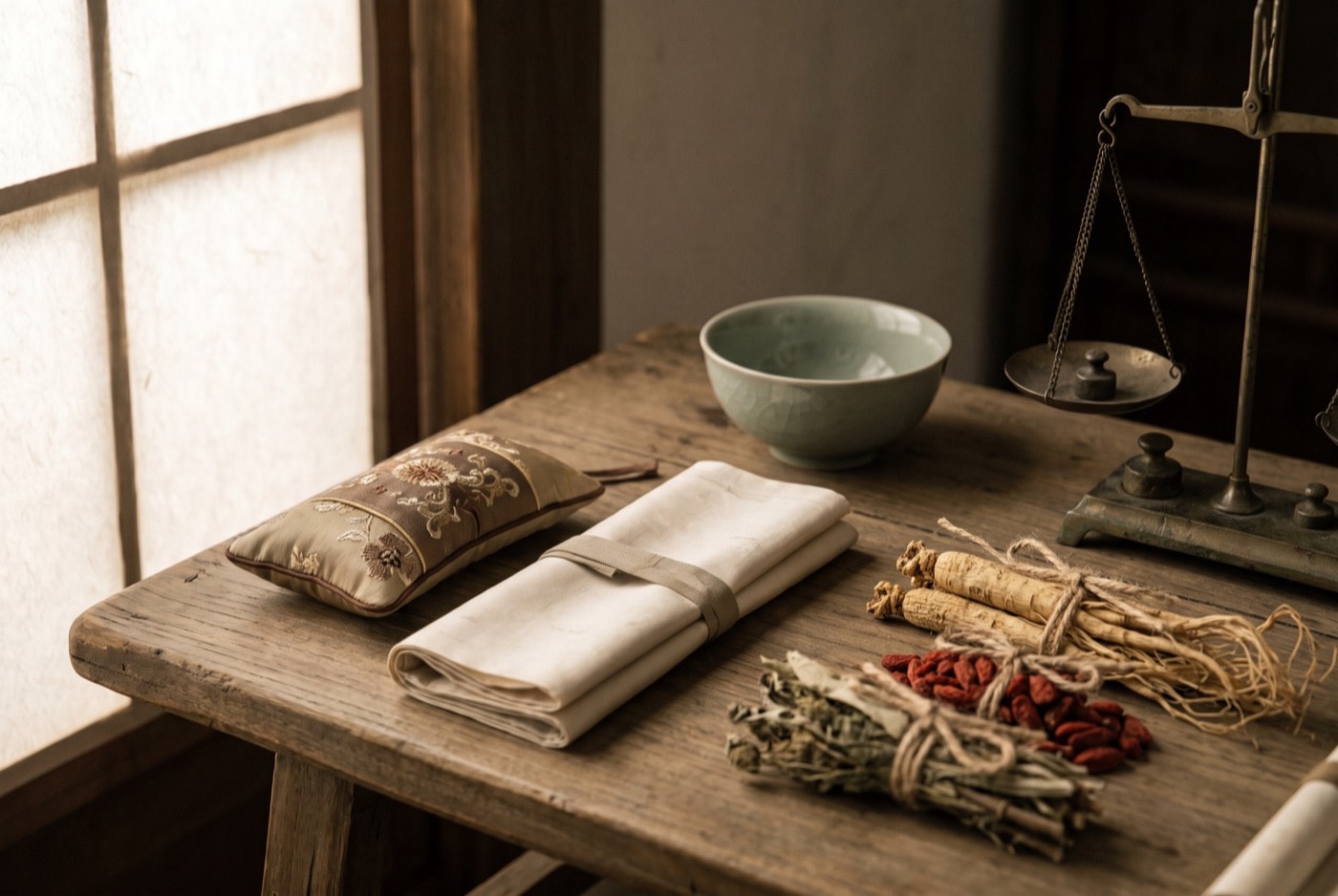
After the headaches and the shelf of half-used bottles, we read. Every component, one at a time — where it grows, what it smells of, what the old texts kept it for — and the plants kept sorting themselves into five — by taste, by nature, by the element each one answered to.
What we foundThe same sorting, written down two thousand years earlier — five tastes, five natures, five elements.

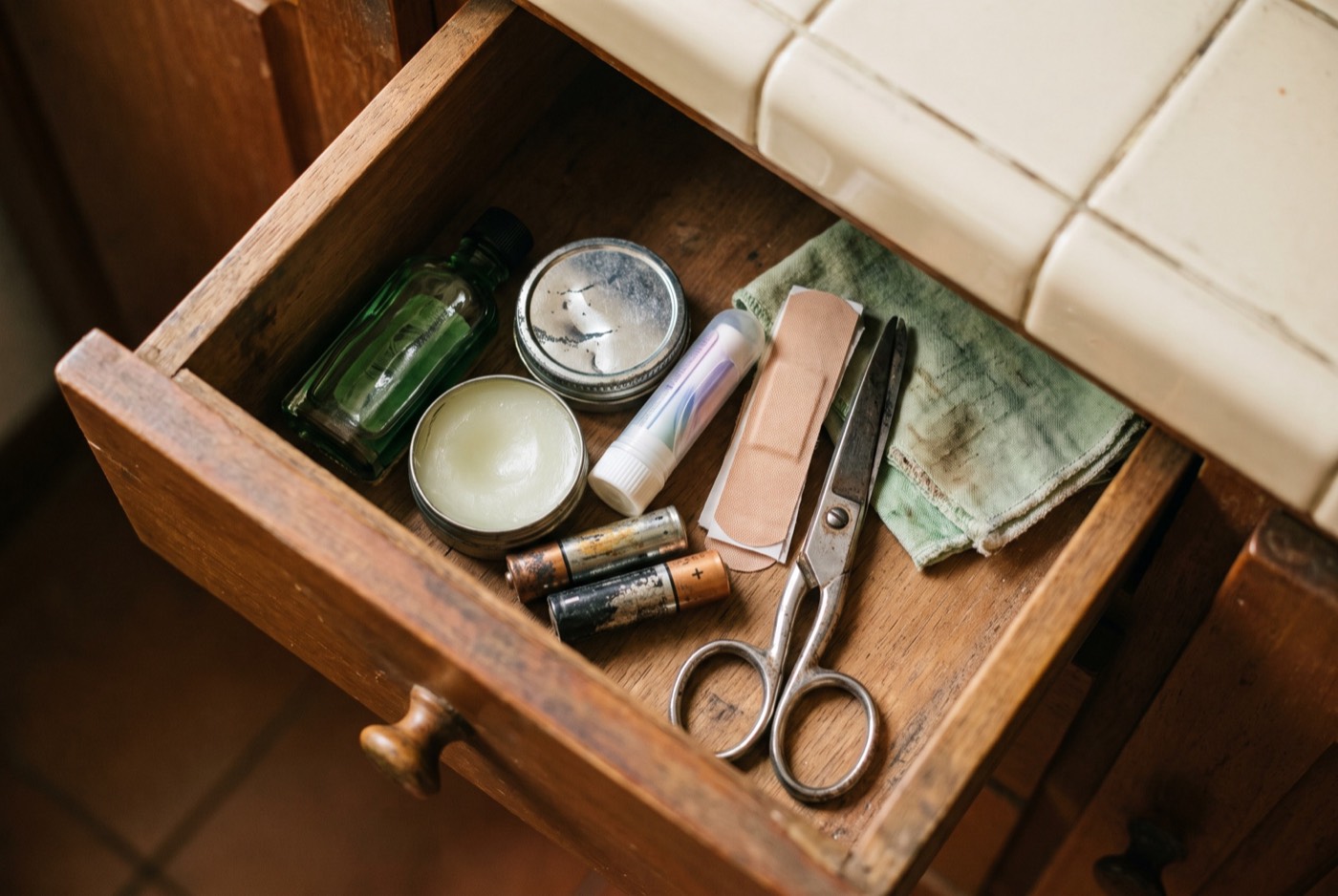
The last piece was in the drawer at home. The medicated oil — eucalyptus, mostly, the leaf the koala lives on — the inhaler, the balm every Southeast Asian household keeps between the plasters and the batteries, made to the same formulas for the better part of a century. The tradition on this page had never gone to a museum. It was in almost every kitchen we had ever stood in.
In a sentenceWe had been buying the old map our whole lives, one fragment at a time, without knowing its name.

Five blends, one per element, composed on purpose from what was in the drawer. We start with the element — the reading says which of the five you have run light on — and then choose the plants whose taste and nature sit under it: sweet and resinous for Earth, sour and green for Wood.
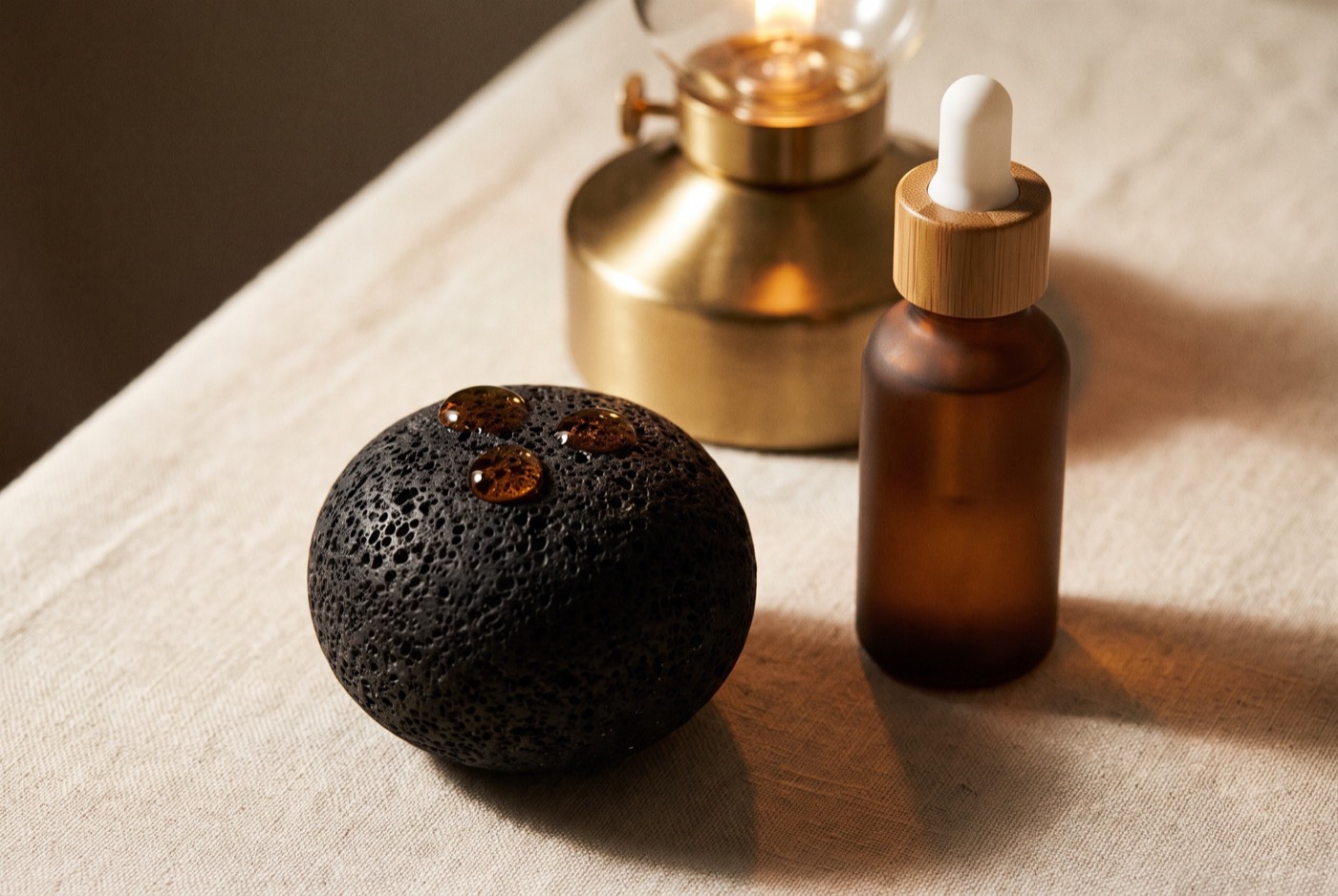
What it smells likeWhole essential oils, on volcanic stone. Earth is finished. Four are still on the bench, and their cards say so.
One composition per element, from whole essential oils. It costs more and varies between batches, and we have made our peace with both.
A free birth-chart reading suggests which of the five you have run light on — the person before the plant.
We describe the element and the scent, and leave your body out of it. A diffuser oil is not medicine, and we would rather promise less than we deliver.
The reading takes a minute, and it tells you which element to start with — the person before the plant.
Find your element尚書·洪範 the five, their motions and their tastes · 鄒衍 Warring States, the cycles · 黃帝內經·素問 the organs, seasons, tastes and the five diagnostic smells · 神農本草經 365 plants by nature and taste · 馬王堆一號漢墓 168 BC, the sachets and censer of Lady Dai · 夢粱錄 the four arts of the Song · 千金要方 Sun Simiao · 本草綱目 Li Shizhen, 1590 · Ibn Sina, Canon of Medicine, c. 1025 · Gattefossé, Aromathérapie, 1937 · Maury, Le capital Jeunesse, 1961.
Shennong is a legend and is presented as one. Dates for the Zhou text follow its written form. "Read the person before you reach for the plant" is our summary of Sun Simiao's standard, not a quotation. Nothing on this page is a claim about what our blends do.